
What Are the 4Cs of a Diamond? A Complete Guide to Diamond Quality
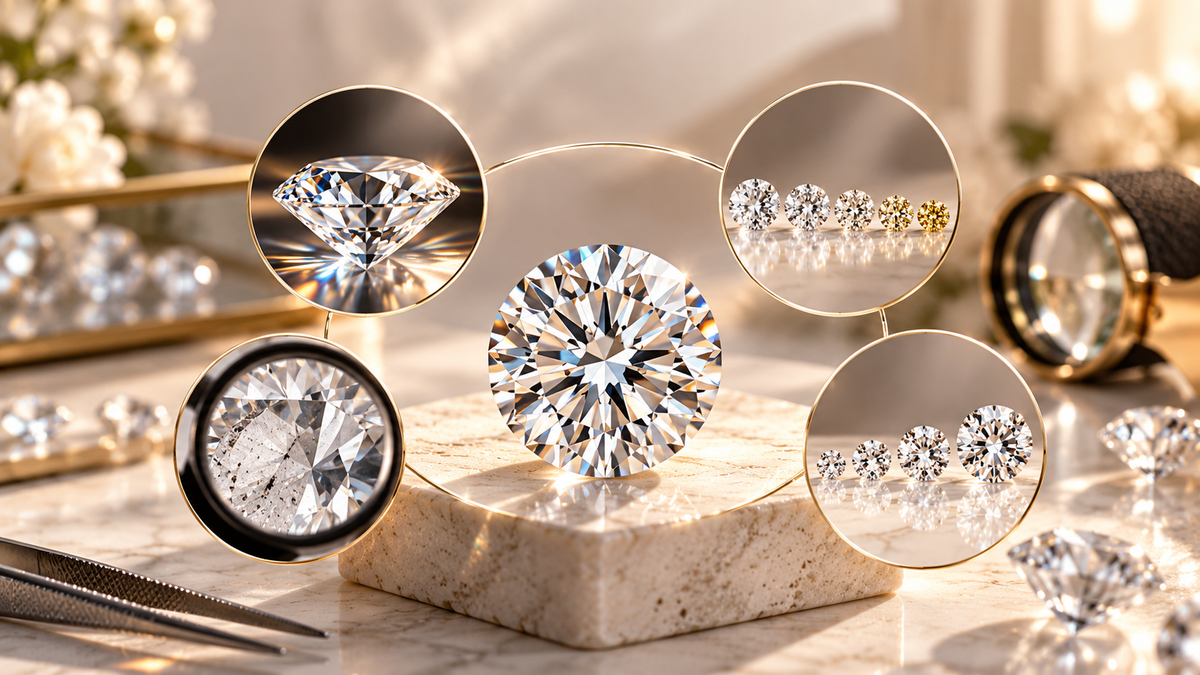
When shopping for a diamond, you will often hear about the 4Cs of a diamond: Cut, Color, Clarity, and Carat. These four characteristics are used to describe a diamond's quality and help buyers compare different stones before making a purchase.
Whether you are looking for a diamond engagement ring, diamond earrings, a diamond necklace, or another piece of fine jewelry, understanding the 4Cs of diamond quality can help you make a more informed decision.
The 4Cs do not work independently. Each characteristic can influence a diamond's appearance, beauty, and price. A larger diamond, for example, is not automatically a better diamond. Its cut, color, and clarity also play an important role in how it looks.
In this complete diamond 4Cs guide, we will explain Cut, Color, Clarity, and Carat and show you what to consider when choosing a diamond.
What Are the 4Cs of a Diamond?
The 4Cs of a diamond are:
- Cut
- Color
- Clarity
- Carat
These four factors provide a framework for understanding and comparing diamonds. When you are buying a diamond online or in person, knowing the diamond 4Cs can help you understand why two diamonds with similar carat weights may have very different prices and appearances.
Let's look at each of the 4Cs in detail.

1. Diamond Cut: What Is Diamond Cut?
Diamond cut refers to how well a diamond has been proportioned, shaped, and finished to interact with light. It is one of the most important factors affecting a diamond's brilliance and sparkle.
It is important to understand that diamond cut is not the same as diamond shape.
For example, round, oval, emerald, cushion, and pear are different diamond shapes, while cut describes how effectively the diamond has been crafted to reflect light.
Why Is Diamond Cut Important?
A well-cut diamond can appear bright, lively, and sparkling. When light enters the diamond, its proportions and facets influence how that light is reflected back toward the viewer.
A poorly cut diamond may appear less brilliant even if it has a high carat weight or good clarity.
When comparing diamonds, especially for an engagement ring, paying attention to diamond cut quality can be more beneficial than simply choosing the largest stone within your budget.
Diamond Cut Grades
For many round brilliant diamonds, cut quality is commonly described using grades such as:
- Excellent
- Very Good
- Good
- Fair
- Poor
The available grading terminology can vary depending on the diamond and grading laboratory.
If sparkle is one of your priorities, consider diamond cut quality carefully before making your purchase.
2. Diamond Color: What Does Diamond Color Mean?
Diamond color refers to the degree of color present in a diamond. For traditional white diamonds, less visible body color generally results in a whiter appearance.
The commonly used color scale for white diamonds ranges from D to Z.
Diamond Color Grades
The scale generally includes:
- D–F: Colorless
- G–J: Near Colorless
- K–M: Faint Color
- N–R: Very Light
- S–Z: Light
The difference between individual color grades can sometimes be subtle, particularly when a diamond is viewed without directly comparing it with another stone.
What Is the Best Diamond Color?
There is no single best diamond color for every buyer.
Your choice can depend on the diamond shape, metal of the setting, personal preference, and budget.
For example, round diamonds can sometimes appear very bright even at lower color grades, while some other shapes may show body color more noticeably.
If you are choosing a white gold or platinum engagement ring, you may prefer a diamond with a higher color grade. If you are choosing yellow gold or rose gold, slightly lower color grades may also complement the warm tone of the setting.
3. Diamond Clarity: What Is Diamond Clarity?
Diamond clarity refers to the presence of internal characteristics, known as inclusions, and external characteristics, sometimes called blemishes.
These characteristics can occur naturally during the diamond's formation.
Understanding diamond clarity grades can help you compare diamonds and determine which stone offers the right balance between appearance and price.
Diamond Clarity Grades
The commonly used clarity scale includes:
- Flawless (FL)
- Internally Flawless (IF)
- Very, Very Slightly Included (VVS1 and VVS2)
- Very Slightly Included (VS1 and VS2)
- Slightly Included (SI1 and SI2)
- Included (I1, I2 and I3)
Higher clarity grades generally have fewer or less noticeable inclusions.
However, the highest clarity grade is not necessarily required to find a beautiful diamond.
Does Diamond Clarity Affect Appearance?
Yes, but the effect depends on the individual diamond.
Some diamonds with lower clarity grades may still appear eye-clean, meaning inclusions are difficult or impossible to see with the naked eye.
Instead of automatically choosing the highest clarity grade, look at the individual diamond and consider whether inclusions are visible.
This can help you get better value when buying a diamond engagement ring.
4. Diamond Carat: What Is Diamond Carat Weight?
Diamond carat refers to the weight of a diamond.
One carat is divided into 100 points. For example, a diamond weighing 0.50 carats is often described as a half-carat diamond.
It is important to remember that carat weight is not exactly the same as diamond size.
Two diamonds with the same carat weight can have different dimensions depending on their shape and proportions.
Does Higher Carat Mean a Better Diamond?
Not necessarily.
A 2-carat diamond is not automatically better than a 1-carat diamond. The overall beauty of a diamond depends on all four characteristics of the diamond 4Cs.
A smaller diamond with excellent cut quality may appear more brilliant than a larger diamond with poor proportions.
When choosing diamond carat weight, consider your budget, preferred appearance, ring setting, and overall style.
How the 4Cs of Diamond Quality Work Together
One of the most important things to understand about the 4Cs of a diamond is that they should not be considered separately.
For example, you might choose:
- A higher carat diamond with slightly lower clarity
- A smaller diamond with excellent cut quality
- A near-colorless diamond with strong brilliance
- A larger lab-grown diamond within a specific budget
The best combination depends on your personal priorities.
If sparkle is your top priority, you may want to prioritize diamond cut. If you want a larger-looking center stone, carat and diamond shape may be more important. If you prefer a very white appearance, color may become a bigger consideration.
Which of the 4Cs Is Most Important?
When asking which of the 4Cs is most important, there is no universal answer.
For many buyers, cut deserves particular attention because it has a significant effect on how much a diamond sparkles.
However, the ideal balance depends on your preferences.
If You Want Maximum Sparkle
Prioritize diamond cut quality.
If You Want a Larger Diamond
Consider carat weight and diamond shape together.
If You Want a Whiter Appearance
Pay closer attention to diamond color.
If You Want Better Value
Look for a diamond with a good balance between cut, color, clarity, and carat rather than automatically selecting the highest grade in every category.
4Cs of Natural Diamonds vs. Lab-Grown Diamonds
The 4Cs apply to both natural and lab-grown diamonds.
Both types of diamonds can be evaluated based on cut, color, clarity, and carat weight.
The main difference between natural and lab-grown diamonds is their origin. Natural diamonds form naturally within the Earth, while lab-grown diamonds are produced using advanced technology in controlled environments.
If you are comparing a natural diamond vs. lab-grown diamond, you should still review the individual diamond's 4Cs, certification, shape, and overall appearance.
How to Choose the Best Diamond Using the 4Cs
Before purchasing a diamond, consider the following:
1. Start With Your Budget
Determine how much you are comfortable spending before comparing diamonds.
2. Choose Your Diamond Shape
Decide whether you prefer round, oval, cushion, emerald, princess, pear, radiant, or another shape.
3. Prioritize Cut
If brilliance and sparkle are important to you, pay close attention to cut quality.
4. Compare Color
Look at different color grades and consider the metal of your jewelry setting.
5. Review Clarity
Determine whether inclusions are visible and choose a clarity grade that fits your budget and preferences.
6. Select Carat Weight
Choose a carat weight that provides the size and appearance you want without compromising the other characteristics that matter to you.
7. Check Certification
A reliable diamond grading report can provide important information about the diamond's characteristics.
Common Mistakes When Buying a Diamond
Understanding the 4Cs of diamond quality can also help you avoid common buying mistakes.
Choosing Carat Over Everything Else
A larger diamond does not always mean a more beautiful diamond.
Automatically Choosing the Highest Clarity
You may be paying more for clarity characteristics that are not visible to the naked eye.
Ignoring Cut Quality
A diamond with poor proportions may lack the sparkle you expect.
Comparing Only the Price
Two diamonds with similar carat weights can differ significantly in cut, color, clarity, certification, and appearance.
Not Considering the Setting
The metal and setting can influence how the diamond looks once it becomes part of a finished ring.
Frequently Asked Questions About the 4Cs of a Diamond
What are the 4Cs of a diamond?
The 4Cs of a diamond are Cut, Color, Clarity, and Carat. They are used to describe important characteristics of a diamond and help buyers compare different stones.
Which of the 4Cs is most important?
For many buyers, diamond cut is particularly important because it has a major impact on brilliance and sparkle. However, the ideal combination depends on your budget and preferences.
Is a 1-carat diamond good?
A 1-carat diamond can be an excellent choice, but carat weight alone does not determine diamond quality. Cut, color, clarity, and shape should also be considered.
What is the best diamond clarity?
There is no single best clarity grade for every buyer. A diamond that looks clean to the naked eye can offer excellent value without requiring the highest clarity grade.
What is the best diamond color?
For white diamonds, higher color grades generally have less visible body color. However, the ideal grade depends on the diamond shape, setting metal, and personal preference.
Do the 4Cs apply to lab-grown diamonds?
Yes. Lab-grown diamonds are also evaluated based on cut, color, clarity, and carat weight, just like natural diamonds.
Shop Diamond Jewelry at Dop & Tang
At Dop & Tang, choosing a diamond is about more than simply selecting a carat weight. Our collection brings together carefully selected diamond jewelry designed for meaningful moments, from engagement rings and wedding jewelry to timeless diamond pieces for everyday elegance.
Whether you are searching for a classic round diamond engagement ring, an elegant oval engagement ring, a sophisticated emerald-cut diamond ring, or a unique design featuring a different diamond shape, understanding the 4Cs can help you make a more confident choice.
Dop & Tang offers both natural and lab-grown diamond jewelry, giving shoppers the flexibility to explore different diamond options based on their style, preferences, and budget. Explore different cuts, colors, clarity grades, carat weights, settings, and precious metals to find a piece that feels uniquely yours. From a timeless solitaire to a statement engagement ring, discover diamond jewelry created to celebrate love, milestones, and memories that last a lifetime.
Explore the Dop & Tang diamond collection and find a diamond that matches your story.
Read more
How to Buy a Diamond Engagement Ring Online in the USA: A Complete Buying Guide
Buying an engagement ring is an important decision, and shopping online can make the process more convenient, especially when you know what to look for. If you are planning to buy a diamond engagem...
Read more
Diamond Engagement Ring Buying Guide for New York Couples
Choosing an engagement ring is one of the most meaningful decisions a couple can make. For couples in New York, the choices can feel endless—from classic solitaire diamond engagement rings to moder...
Read more